
Black Ledger Entry 001: Environment and Atmosphere
Imagine walking through a cornfield. It’s dark. Lit only by the quarter moon. The stocks are just tall enough to see over, but you have to walk slowly. Leaves and stems is a little too dense to see your next step. Could there be a snake waiting to strike? A murder of crows stalking you? While considering these threats, you noticed the scarecrow cross…… And it’s empty.
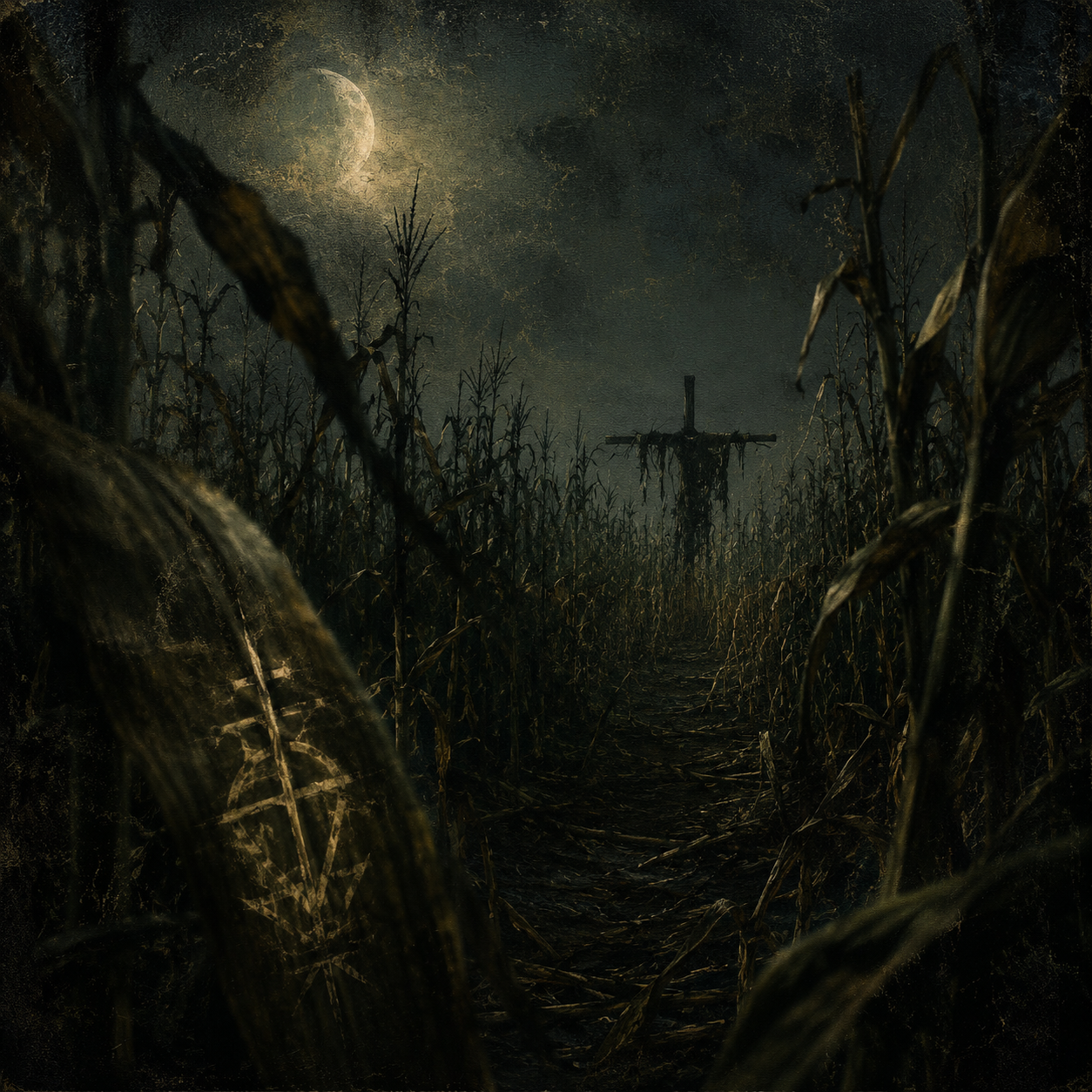
“Environment, places guest in the world. Atmosphere informed them it is unsafe.”
I approach haunt audio in two lanes: Environment and Atmosphere.
Environment establishes the physical space
wind through corn stalks
distant insects
old machinery
strained wood
Atmosphere introduces emotional intent.
Unease
Isolation
Threat
Anticipation
Let’s dissect the previous scene.
How do we place the guest in the environment? Light wind movement. Rustling leaves. Faint crow noises in the distance. Those sounds establish the location.
Now the environment needs intention.
This is where the creative layer begins.
Beneath the environmental sounds, imagine a low drone slowly shifting in tone. A blurred mid-frequency violin fades in, bends slightly downward, then disappears again. Not loud enough to dominate the scene. Just enough to make the guest feel uncertain.
That subtle tension becomes the hesitation.
When atmosphere is handled effectively, guests begin slowing down before a scare even happens. Not because they were startled, but because the environment itself begins to feel unsafe.
Now picture the same scene, with the same environment sounds, and instead of the dread drone, replace the atmosphere with the intensity of horror, trailer music. While, trailer music is exciting, which we want guest to be excited, however, if the intent of your scene is immersion, trailer music is out of place.
Often we want haunted attractions to feel like the movies: energetic, loud, chaotic, constantly escalating.
But consider the perspective of the victim inside a horror film.
They do not hear adrenaline-driven drums or rising ostinatos.
They hear the environment. They hear footsteps through dead leaves. Corn stalks brushing against clothing. Wind movement. Something shifting in the dark beyond visibility.
Atmospheric scoring works because it respects that perspective. It reinforces the environment rather than overpowering it.
Last haunt season, my family and I attended Sweet Dreams Haunted Attraction in Mobile, Alabama.
Two scenes stood out immediately.
Near the beginning of the attraction was a detailed house facade overtaken by overgrowth and decay. Plants consumed the structure. The environment felt abandoned and unsafe; Walking by the structure, I hesitated. Attempting to absorb what could be coming next.
Later in the attraction, guests moved through an overgrown garden filled with vines, lattice overhead, and dense plant life restricting visibility and movement. The scene naturally slowed guest pacing and forced people to absorb the environment rather than rush through it.
Sweet Dreams nailed the scenes. Just enough lighting to make a person skeptical of taking the next step; visuals that invited examination; audio that kept the environment believable..
These scenes are how I think about haunt audio design. Environment and Atmosphere. I ask myself, “What does the environment need to feel in place?” “What do I want the guests to feel?”
For the environment, maybe faint insects, subtle leaf movement, distant structural creaks. Enough to convince the guest the place is alive.
For the atmosphere, perhaps fragmented low/mid textures repeating unevenly beneath the scene. Not musical enough to feel like a soundtrack. Just enough tension to subtly pace movement and create anticipation while guests navigate the space.
Examining the opening scene of this Black Ledger Entry: The cornfield at night. Let’s score this in two different ways. First with the Atmospheric method.
In contrast, what if the exact same scene was higher energy. Same identical crows and nighttime environment. Picture yourself in the scene.
That doesn’t go to say that musical energy is never useful in a haunt, I believe it is about the perspective. It is about the feeling required by the scene. It’s about the feeling we want to translate to our guests.
No matter what we do for the industry; Set building, prop construction, sound design, acting, etc. “Serve the scene”
“The best haunted environments do not constantly attack the guest.
They convince the guest an attack could happen at any moment.”